Thursday, 3 August 2017

Recovery, recovery, there’s no-thing like recovery.....


... for  breaking every human bone, due to the law of gravity.

More on that story later..


Recovery:  restoration or return to any former and better state or condition.”                                                              (www.dictionary.com)


Somewhat like Homer Simpson I spend much time thinking about taking it easy. Not exactly plotting how to get away with watching the game with a stack of beers, more how best to allow my body to recover. Sometimes I seem to spend my life thinking about recovery -  my own and that of all my patients.


Training theory applied to running.


It is not during the training session that the body makes the required positive changes and adaptations that we runners are seeking. It's during the recovery time after.


“Training is giving a large enough stimulus that it creates an adaptation” Steve Magness


An optimal training stimulus causes fatigue and breakdown of the body’s systems and muscles - for example small amounts of tissue damage - micro tears - which weakens the tissue. During recovery the body repairs damage and replenishes energy stores. With adequate recovery the body super-compensates, rebuilding itself stronger and more efficient than before in anticipation of the next challenge. This process improves performance as well as reducing the risk of injury.


I have a passion to improve my own running - to run faster, to run longer, to improve my results on the fells and in orienteering and to improve my times on the roads.


To achieve this I spend much time, usually whilst out running, musing on what training stimulus my body needs to get fitter, stronger and more robust. Too much and I will place myself at greater risk of injury or illness, too little and I won’t improve.


But, perhaps unusually for a runner or a running coach, I spend an equal amount of time thinking about my recovery. When is my body ready for the next stimulus? Has it recovered yet? If I run Park Run hard on Saturday and race, a classic distance orienteering course on Sunday then can I do the Burbage Fell Race on Tuesday? Will I have recovered enough?


If the gaps between hard sessions are too long  I will start to get slower and weaker. But if the gaps are too short the same will happen - I will get slower and weaker. Much thought is invested in getting that balance right. Sometimes tough decisions are needed - for example to miss out on a race I’d really like to be doing.


Figure A: Level of preparedness becomes depleted by training stress, only to be restored as time moves on through recovery. According to the model, you leave compensation through recovery, and surpass earlier preparedness opening a window to reintroduce training stress. (Zatiorsky & Kraemer 2006)


Training theory applied to Physiotherapy treatment.


The process of training - stressing the body beyond its natural tolerance and then allowing it to recover and supercompensate - applies also to treatment and rehabilitation of injury.


Every day. I am trying to help my patients understand how to increase their fitness, strength and robustness in some way.


It could be specific to the injured or painful tissue or to connected tissue and muscles around the injured area, or it could be to the whole body. Almost every long term treatment involves a stimulus - specific exercises, a series of training sessions or a low intensity activity such as walking for ten minutes once a day. The goal is to tailor the stimulus so it is just right for that patient. Too much and I will cause more pain and put the patient at risk of further injury - to little and their body won’t repair itself to the level it was before the injury.


But… as with with my own training it's not just about the stimulus, I need to also consider the recovery from the stimulus. Without that the treatment is as likely to be damaging as beneficial. Just as for my own running training, helping each patient to heal is about striving to find the optimal balance between stimulus and recovery specific to that person.


How long does recovery after a stimulus take?


Time required to recover depends on the amount of damage the stimulus has done.


Very gentle easy exercises or activities will cause little damage or fatigue and so can be repeated again very quickly, even within the hour. With very painful or acute injuries I frequently prescribe these very gently exercises or activities. Little and often.


Exercises or activities that provide a greater stimulus and challenge to the body need a much longer recovery time, between six and forty eight hours depending on how demanding they are. This sort of stimulus is what I am aiming for both with my own training and longer term patient rehabilitation once any acute symptoms have settled down.


Races and challenges that are really demanding need even longer for recovery. If the body has been significantly deplinished from the stimulus it may need days or even weeks to recover. An extreme example is Steve Birkinshaw’s record-breaking run round the summits of all 214 Lake District Wainrights in seven days. He covered 321 miles with 91,600ft of ascent and descent with only a few hours rest each night. His story of the challenge, “There is No Map in Hell” describes in detail how it took him months to properly recover.  


How can I speed up the recovery process?


You can’t. And nor should you want to. It's during the recovery period your body is getting stronger and fitter. Try to speed this up and you will reduce the training effect.


But…there are lots of ways you can slow down your recovery.


Optimal recover requires time, rest, sleep and nutrition.


Cutting corners on any of these will slow the recovery process down. Other factors that delay recovery are:


  • Stress
  • Poor health
  • Age. Unfortunately the older we get the longer are body takes to recover.
  • Alcohol
  • High work or life load. This is why professional athletes have a lot of downtime - more than is possible in most jobs.


Does stretching help my recovery?


No. That doesn't mean you shouldn’t do it, it’s just not a part of your recovery process. Here is a previous blog on stretching.


What happens if I don’t allow my body to recover sufficiently?


  • Your injury probably won’t get better and might get worse.
  • Your performance won’t improve and it might get worse. (overtraining).
  • Your body will gradually be able to take less load, not more.
  • You will increase your risk of further injury.


Case study - my 87 year old father-in-law


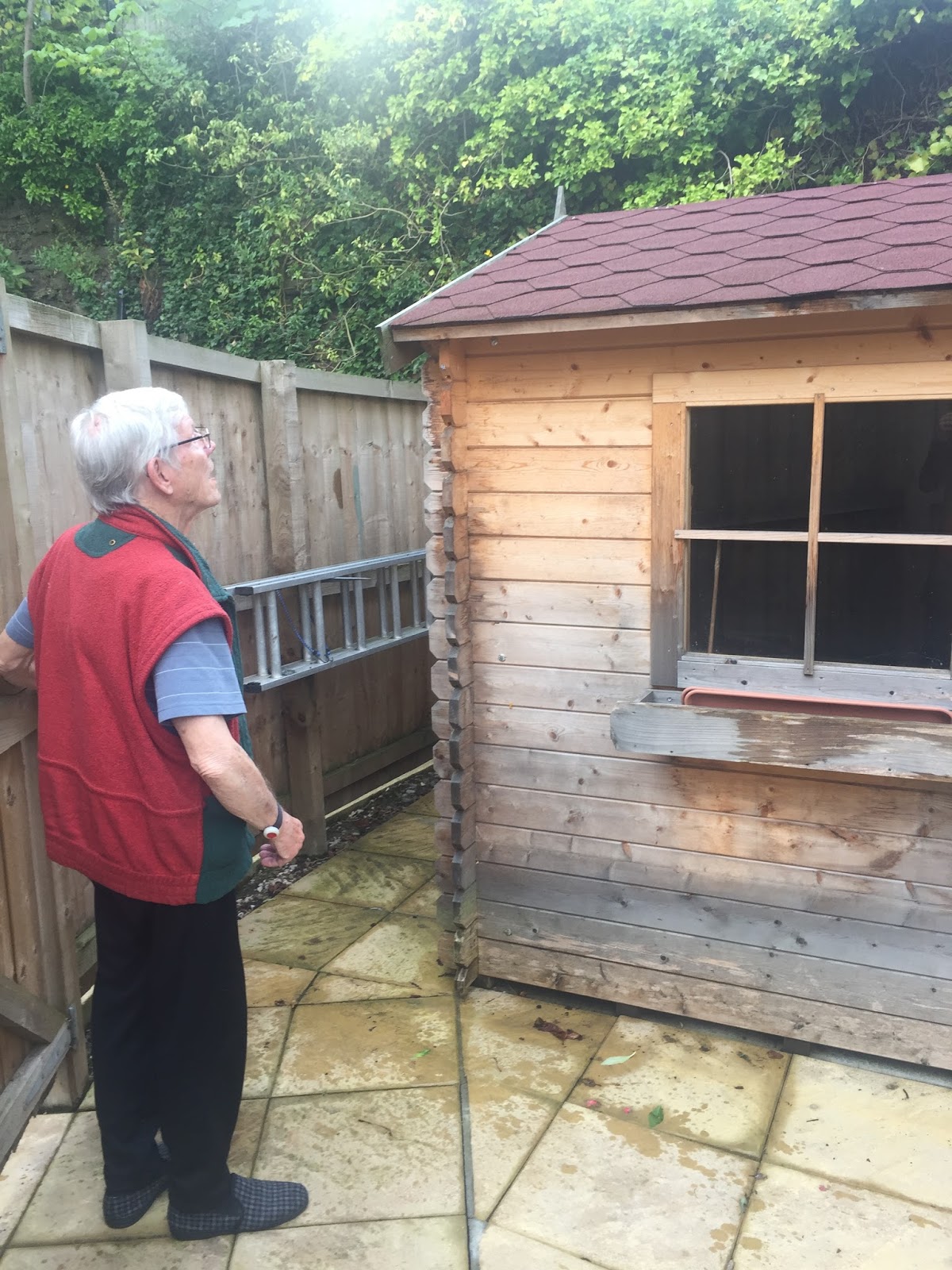
Three weeks ago my father-in-law, who generally walks with a stick and sometimes with a zimmer, thought it would be a good idea to climb up a ladder onto the garden shed to try to remove some sapling shoots from the garden wall.

The ladder (now locked up and key hidden) and shed.

Unsurprisingly he lost his balance and fell backwards of the shed leading to five broken ribs,three broken back bones and a week in the spinal unit at the Northern General. A former regional standard pole-vaulter who spent his life working in the Lake District mountains his initial recovery was impressive given his age.


He has now been back home for a week. During that week I have been working with him and his excellent NHS physiotherapist to ensure a balance between his training stimulus (activities) and recovery (rest).


‘Just right’ for him at the moment are the daily activities of getting dressed, showering, making his own breakfast and lunch, twice daily physio exercises on the bed and two walks of about 100m. This is the little and often approach. In between these activities he needs to sit and rest to allow his body to recover from these small loads.


If he does too little he will get weaker which at his age is a serious risk. His ability to walk and look after himself will deteriorate. He will also not apply the required stimulus to allow the broken bones to heal well.


However when he does too much the pain in his back and ribs increases and he feels very fatigued. This then forces him to take much longer rest and recovery time which leads back to him feeling sorry for himself and doing too little. So it’s important to get the balance just right.


If he keeps doing the little and often his body will get stronger and the amount of ‘just right’ will slowly increase. He will build up the length of the walks, add more exercises eventually doing them whilst standing rather than lying, and eventually return to his weekly exercise class.


Case study - International Orienteer


Charlotte competing in the world championships in Scotland 2015 (Photo by World of O)

Back in January Charlotte sustained a significant injury to her achilles tendon. Her normal training stimulus was 80km running a week including three tough speed sessions and twice weekly gym sessions.


Following the injury even walking one mile or cycling was too much load for her achilles. Every time she put slightly too much stimulus through the achilles the pain flared up for several days forcing her take even more recovery time.


I regularly see athletes with achilles injuries who have taken more than six months to recovery. Typically they yo-yo, resting until there is no pain and then returning to normal training too quickly, at which point the pain returns. Tendon recovery has been well researched and the scientific consensus is that tendon’s require loading to heal.  


Over the next five months I worked very closely with Charlotte aiming to find the optimal stimulus and recovery to build her back up to a full training week.


Initially this was a short walk or a few calf raises with recovery time between each dose. As the injured tissue got stronger the doses were built. At this point we moved to a stimulus that caused a slight aggravation of symptoms, followed by forty eight hours recovery before applying the next stimulus.


When she started running again it was just for thirty seconds at a time.


Occasionally we needed longer recovery time following an activity, usually because other loads such as having to walk further led to delayed recovery from a run.


As the tendon tissue got stronger we were able to build up the stimulus through adding small amounts of faster running and re-introducing hill running alongside building up the length and frequency of runs.. All the time we were listening to the reaction from the tissue and ensuring adequate recovery before the next stimulus.


After five months of this gradual process she was finally able to put in a normal training week. Charlotte is now fully recovered and although not fully back to her best she is winning local five and ten kilometre races and raced successfully in a World Cup series in May.


If you're interested in understanding more about recovery and how it links to your own injuries and training we will be putting on two evening workshops in September and December 2017.


Wednesday, 28 June 2017

About Pain

The Pain System #4 - Some more of the science


"Stress biology is concerned with the physiological mechanisms and behavioural strategies that enable organisms to survive or maintain homeostasis” “Pains prime adaptive purpose is to powerfully motivate the organism to alter behaviour in order to aid recovery and survive” 


(Gifford 1998)


This blog is an appendix to the previous three blogs on pain response and sensitisation. It is intended to give some more detailed background on how the brain in particular manages pain.


Part 1: How our Tissue Responds to Pain

Part 2: Amplifying Pain - Central Sensitisation

Pain 3: Shark Attack, It's all in the Mind

The basic function of pain is:

  • To protect you.
  • To alert you to danger - often before you are injured or badly hurt.
  • To makes you move and think differently
  • VITAL for healing

Pain is a normal response to what your brain judges to be a threatening situation.


The basic pain mechanism involves
Input / stimulus (the nerve endings in tissue) => process and evaluate (the spinal cord and brain) => output / response (the whole body). “We need a system that is able to monitor health of organisms own body and provide appropriate recovery response if damage occurs” (Gifford 1) Is Pain is all in your mind? Well, yes. The following areas of the brain are involved in evaluating pain inputs and formulating responses:
  • area for organising and preparing movement.
  • area for concentration and focus.
  • area for problem solving and memory.
  • fear, fear conditioning and addiction area.
  • sensory discrimination area.
  • area for stress response, autonomic regulation and motivation.
  • movement and cognition area.

Following a potentially painful stimuli the evaluation and response also involves many different systems of the body:
  1. The Sympathetic nervous system - this increases heart rate, mobilises energy stores ready for movement and releases adrenaline into the body.
  2. The Motor (muscle) system is very important e.g. remove limb from flame, limp, run away, hide, prevent movement of area under threat. As we have seen, one problem is once trained the body tends to maintain these patterns after the stimulus has gone.
  3. The Pain system itself - this lets you know what is going on i.e. you feel pain
  4. The Endocrine system - Mobilises energy stores and suppresses any processes that are not vital to save energy (growth, repair processes, inhibition of inflammation, and inhibition of the immune system)
  5. The Immune system - responds later and fights invaders, sensitises neurones, makes us sleepy to promote healing.
  6. The Parasympathetic system - also responds later, it nourishes cells and heals tissue.

These systems are designed to work really hard for short periods in a threatening situation. They are the same systems that are activated when your body is under acute stress and are responsible to flight / fight responses. In the same way that prolonged stress which maintains long term activity in these systems is is undesirable, pain for a prolonged time causes sustained activity in these systems which causes over-sensitisation.

Persistent, chronic pain:

All pain is real but some pain persists after healing has occurred. This is termed persistent pain or chronic pain. In these situations the brain concludes that a threat remains and you still need protection. The brain can experience similar sensitisation to that described for the spinal chord in blog #2. The pain ignition nodes in the brain increase their sensitivity so less stimulus from the spinal cord activates them. They can even start firing with no stimulus from the spinal cord. The brain also creates more sensors in the pain ignition nodes and produces more chemicals to activate the sensors. This can be particularly powerful when it occurs in the part of the brain that deals with memory - you can relive the pain even though there is no danger to respond to. For example people with whiplash can feel pain when the car ahead stops even though they are not themselves stopping suddenly. The brain areas devoted to different body parts or functions start to overlap making you sensitised to pain in different areas of the body to where the stimulus originally occurred. This is conceptually similar to the chemical flooding of the dorsal horns in the spinal cord. The longer the pain persists the more advance these changes become. When the brain is sensitised it's not just pain that is persistently produced. Other protective systems also increase their sensitivity:


  • The Sympathetic Nervous System makes you more aware and vigilant - as if you have turned a CCTV onto your body.
  • The Endocrine system directs more energy to muscles for flight or fight.
  • The Motor system keeps muscles constantly activated ready for fight or flight.

These systems then send signals to the brain in a self-perpetuating feedback loop. With a sensitive system inputs unrelated to tissue damage are judged as dangerous and can cause pain. You won’t know there is no damage or that its just your brain decided dangerous. It just hurts. Your thoughts are real. Real chemicals are released and real nerve impulses occur. Thought processes alone are powerful enough to maintain a pain state.


Altered muscle activity:


When you are in pain your brain alters your muscles activity. With pain being a warning sign for danger your body firstly increases activation of muscles to ready you to take action - flight or fight. This reaction is to aid protection of the whole body from further threat.


It also changes how your muscles work to help protect the local tissue where the pain is top prevent further damage. These changes cause bracing / splinting of the area by increasing the tension of muscles around the pain, and altering the movement of the whole area to reduce the load on the painful area (such as limping, or grasping the area). This works through taking load off the injured tissue by putting more load through surrounding tissue.


In the short-term these are all a positive strategy by your brain to protect your body. In the long term it becomes a hindrance not a help. 

Long term over-activation of these muscles makes them feel stiff and tight. This tightness can then change how you use other muscles. Smaller muscles who's role is to control and stabilise stop working as effectively as they perceive the larger muscles to be doing their job.

This altered muscle activity will then change how you move, feel and hold yourself.


So in rehabilitating any injury you need to address these changes in muscle activity. This is done with traditionally stretches and strengthening activities as well identifying and addressing threats and fears that are making your muscle system work so hard to protect you.


References

Gifford L, (1998) Topical Issues in Pain 1. Physiotherapy pain Association


Butler D.S, Moseley L.G (2013) Explain Pain, Noigroup Publications. 

Mense S, Gerwin R D, (2010) Muscle Pain - Understanding the mechanisms, Springer


Melzack R, Wal P.D (2008) The Challenge of Pain, Penguin Books.

Thursday, 1 June 2017

Glutes - the new core?

I qualified as a physiotherapist in 1998 which seems a long time ago now. It was right on the cusp of a new era of physiotherapy treatment. During my training I spent a lot of time electrocuting people with various strange looking machines with the goal of curing all injuries and getting rid of all pain.


Whilst I was becoming a qualified practitioner learning my trade in the health service and studying for a Master’s degree these machines were being pushed aside in favour of the next trend - suddenly all ailments could be cured not by electricity but simply by ‘activating your core’.

A new muscle was introduced to our lexicon. The ‘transversus abdominus’ the magic cure all for back, knee and shoulder pain. Just get the patients to lie on their back and work this muscle in a very specific and magical way and all would become well with the world.

I set about my job of activating patient’s cores with great gusto, armed with my new argot - “zip and hollow”, “tuck in”, “gently pull your core into your spine”. It had to be just right or it wouldn’t work.

Once your patient's core was activated they were then shown how to challenge it using a very specific and precise series of exercises. We even had a gadget to measure whether the patient was perfectly working the core.


The result of all this precise deep abdominal activation was, well, not a lot.

I then started reading the research it was all based on - a few studies by some Australians - and realised that there were significant flaws in their arguments. Further reading found that there were many ways to work the muscles around the back and many of them far more enjoyable and effective than the strange ritualistic exercises we had been prescribing.

For me the final nail in the coffin came with a study published a few years ago showing that whilst exercise does help to reduce lower back pain no particular type of exercise is any better than any other (study).

What next? A period of sober self-reflection, perhaps challenging ourselves and our assumptions as medical practitioners?

Or instead, how about a new wonder muscle? The Glute.

Suddenly all my patients had weak, underactive, lazy glutes that just weren’t firing.

The cause for all these deactivated bums? Too much sitting. So you poor runners with your ITB, shin splints and achilles pain had all better get your glutes firing. Squeeze squeeze squeeze. You’d better clam and bridge for all you’re worth.

So everyone got better, right? Guess what?  Results were sketchy. Some patients recovered, others did hundreds of clams and bridges daily with no change to their symptoms.

So I shouldn’t bother with glutes exercises, or core, or Physiotherapists for that matter?

Well, not quite. All these muscles are important and may need looking after but they aren’t a cure for all pain and ailments.

The largest bum muscle, gluteus maximus, is a powerful muscle that helps power you forward when you run. The faster you run the harder the glute has to work. This is why sprinters tend towards a rather large behind.

The deeper gluteus muscles (medius and minimus) support and stabilise the pelvis as you run so when you land on one leg they provide the scaffolding to keep the leg steady to enable you to push off.  

So they are really important?

Yes…... but as part of a whole system. They work with other muscles, fascia, tendons, bones, joints, and nerves.  These other tissues and muscles all have their own part to play. Strengthening the glutes in isolation will rarely do very much.

In clinic I often see patients with ongoing issues after being treated by several other physios. They arrive confused and frustrated with their problems. Like many others they have been told that the cause of their problems is a weak core, glutes or both and have then engaged with their prescribed exercises for sometime with little benefit.

Case study 1

Sarah arrived in clinic with ongoing lower back and bum pain that was stopping her enjoying running. She had seen a physio previously who had declared that her glute wasn’t working. She had been given the standard bridges and clams and worked hard at getting her glute to work. But the pain continued and she still struggled to run. Her logic was that despite all the work she had done she still had a ‘weak’ glute. Her glute whilst lying on her side was very strong but in the one leg stand position which is key for running this strength didn’t translate into a strong stable leg.

She underwent a rehabilitation program focusing on balance and control on one leg, working all the muscles including the glutes in a running relevant position. She improved quickly and then slowly built up her pain free running over time.  

Case Study 2

Like Sarah, Mary came to see me after having seen several other physios. She had pain in her hamstring tendon which kept flaring up when she did a bit more running especially downhill running. She had been told she had poor biomechanics on the injured side and needed to strengthen her glutes to correct this.

On assessment the hamstring muscle on that side was much weaker, following a previous tear, thus when running downhill the weak hamstring caused more load on the hamstring tendon. For Mary treatment was based around hamstring strength work and advice on building her running up and discussing technique when descending.

Case Study 3

John came to see me after nearly two years of pain and frustration following an accident which injured his knee. He had been prescribed many exercises including some of the standing  exercises described below,  but he had still not fully recovered.

He had ongoing changes to strength, control and balance through his injured leg but he was also struggling with the changes the accident had had on his overall fitness and lifestyle.

For John the key to progress was developing a greater understanding of injuries, damage and pain pathways alongside guidance as to how to build his fitness and physical cofidence back up to the level he once enjoyed. This included glutes exercises to address the reduced strength and control on the right leg, but this was only a part of the overall treatment plan.

For more information on how pain works see these previous blogs. (here, here, and here)

So how do I address the glutes when assessing and treating in clinic?

  • If I give a strength program to help reduce the risk of injury I will always include exercises to strengthen the glutes. Including some exercises that mimic how they will be used in the person's sport.
  • With any lower limb injury I will always assess how the glutes are working and if I have any concerns I will include glute strength exercises in any rehab program. But rarely is it just the glutes I want to target.
  • I will always tailor the glutes exercise I give to the specific needs, strength and ability of the patient.

So... what should you do?

I would recommend everybody to do some form of strength work as part of their training or even just as part of their life. Its pretty clear from research that all exercise is good for us and strength exercises are one part of this.

For people that do engage in sport evidence shows that strength work reduces injury risk and improves performance. For injuries evidence is also strong to show that exercises are one of the most useful tools we have to resolve the injury and reduce pain.

And when you engage in any strength program I would include some exercises to work the glutes.

So here are some different glutes exercises. I have split them into floor exercises and standing exercises that more closely mimic how we use the glutes when we run. I wouldn’t do all these exercises, just find two or  three exercises that you find challenging but not impossible. A combination of floor and standing exercises are good.

If you find 30 reps of an exercise is easy then you need to make it more challenging. I have suggested ways of doing this at the end of each exercise.

Floor Exercises

1) The Clam with variations. Find the one for you. You need to feel it working your glute and not cause any pain

Standard clam (feet together, lift the knee up an down) 


Standard clam with feet in air.

Reverse clam - (knees together, lift the top foot)


Reverse clam with feet and knees in air

To make harder add a resistance band around the knees for the standard clam and feet for reverse clam.

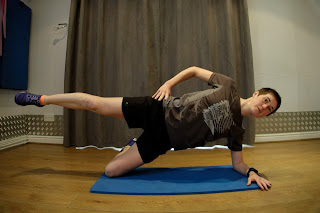
2) Side plank leg raises - a great exercise to work the ‘core’ and both glutes. These variations get progressively harder.

Side leg raise


Half side plank leg raise (on elbow)


Full side plank leg raise (on elbow)

Full side plank leg raise (on hand)


3) Front plank leg raise - extend hip by lifting foot up to ceiling (mainly works glute max as well as the ‘core’)

Standard leg raise


Elbow plank leg raise

Hand plank leg raise


Standing Exercises

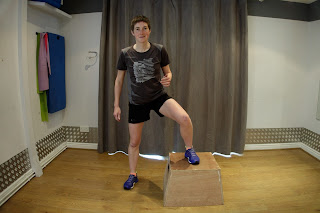
1) Step up to balance

2) Side step up to balance

3) Single leg seated squat

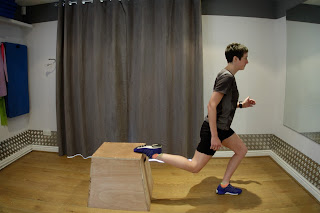
4) Bulgarian split squat - drop hips down and bend knee (like your seating down)


Make these harder:

  1. Higher step (exercises 1 & 2)
  2. Lower seat (exercise 3)
  3. Add weights (kettlebell, weight plate, dumbbell, bar, rucksack with bags of sugar in!)
  4. Do the exercise very slowly and controlled (builds balance and control)
  5. Do the pushing up phase of each exercise as fast as possible (builds power)