Friday, 28 April 2017

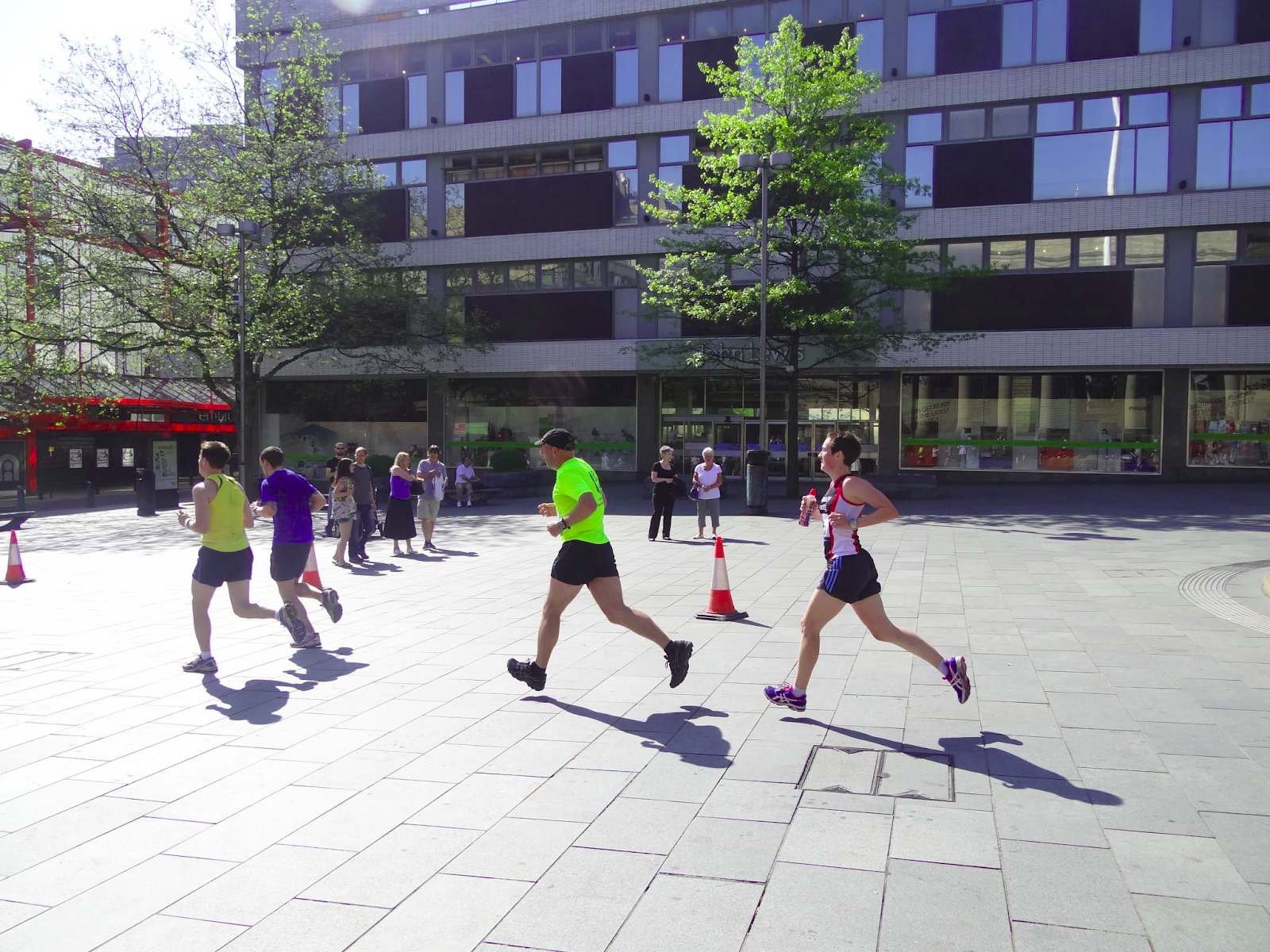
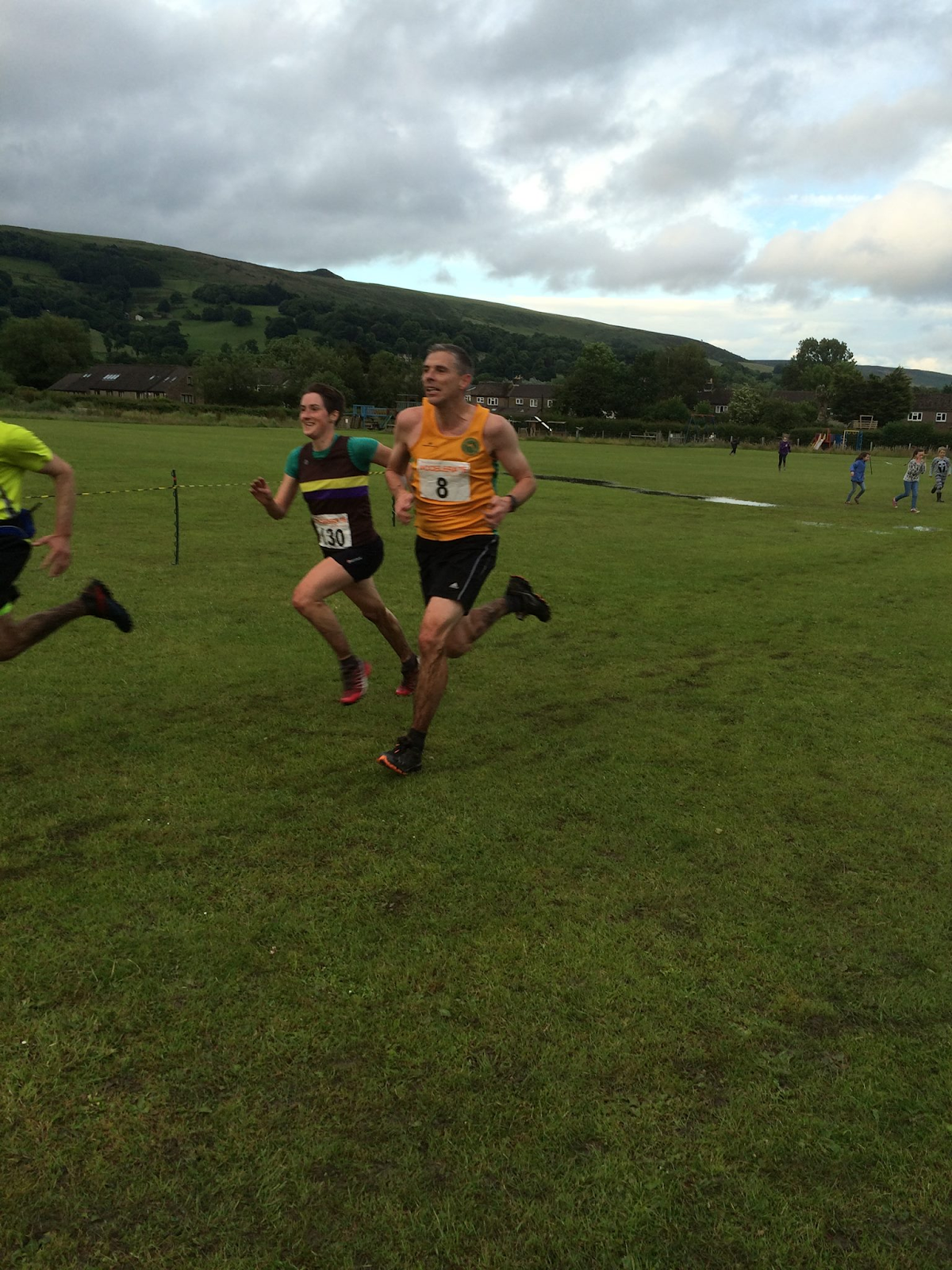
Sally's return to the roads - Sheffield Half 2017

I gave up road running 4 years ago after finally achieving my marathon sub 3 with 2:57 in the Amsterdam Marathon (at the 8th attempt!).

Road running for me had become a chore, a slave to the watch. Each session was spent chasing times, rather than enjoying what was after all a hobby. I was enjoying fell and trail running much more. The variety of terrain made each mile different so there was no point trying to work out paces, instead, it was more about running to feel and running each mile on merit. I was getting some good results from this approach, gaining selection for the Great Britain team for the Trail World Championships at ultra marathon distances for the last three years.

So, what made me suddenly come back to road running for this years Sheffield Half marathon? It was a local race but most importantly hilly!

The Sheffield Half Hill
The uphill first half, followed by 6 miles of fairly steep downhill appealed to the fell runner in me. I was a much stronger runner than when I was previously road running due to all the hill running as well as regular strength and conditioning work.

So, the experiment was, how much speed had I lost through fell running and could a half marathon be done on fell fitness? Instead of the speed intervals and tempo runs I was going to stick to what I enjoyed, shorter fell races for speed work and a hilly Dark Peak road run of 10 miles or so on a Wednesday night.

My half marathon build up included:

  • Weekly mileage (20 weeks) of 55-76 miles.
  • 7 Fell races, varying from 6 - 21 miles, the last of which was Edale Skyline (21miles) 2 weeks prior to the half.
  • Howarth Hobble ultra marathon (33miles), 5 weeks before, also the GB selection race.
  • 1 Parkrun, 6 weeks before.

The Parkrun was the first time in 4 years I had run fast and consistent miles. It was a PB at 19:04! The mile splits were 6:00, 6:08, 6:04. I wouldn't have thought I could do 1 mile at that pace, never mind 3 in a row!

Come half marathon day, I had no idea how I was going to do. I didn't work out any splits, targets or paces, instead I planned to ignore the watch and run to feel. After all, this is how I'd been running all my fell races. On the climb up to the Norfolk Arms, around 5 miles in I over took 2nd lady and from then onwards I held onto 2nd place. I had to work incredibly hard towards the end, I was feeling the lungs more than the legs by the 11-12th mile but was aware 3rd lady was right behind. The last mile was done in 6:01min/mile despite a slight uphill, and I only finished 10 seconds ahead of her in the end! My overall average pace was 6:27min/mile, giving me a time of 1:24:47. This was 2 minutes slower than my PB but that was set on a pancake flat course at the North Lincolnshire Half, 4 years ago.

So what did I learn:

  • Speed and interval training is not needed for me to race a fast half marathon. When chasing road times I felt I picked up niggles from the high intensity sessions on hard surfaces. To perform at half and marathon distances the risk of these sessions (greater loading on tissue) may not make up for the reward (faster top end speed). 
  • Consistent miles over months and years is the key to progress. The majority of these miles need to be done at an easy pace, but this race showed me that these base miles don't have to be race specific. Hilly off road routes which involve walking can be a valid method of getting these base miles in and are kinder to your body than high road mileage.  
  • Adding strength and conditioning to my training seems to have helped me both maintain (or even improve) my road speed and reduce the number of 'niggles' I experience. This is in line with current research findings. 
  • You can take the stress away from road running by ignoring the watch and running to feel. And it can be just as successful!

Howarth Hobble 2017 - I finished 2nd lady securing selection for GB. 


Monday, 6 March 2017

Ankle Strengthening

“Wibble wobble
Wibble wobble
Jelly on a plate”
(unaccredited)


Sprained ankles lurk around every corner, particularly for fell runners and orienteers who are maladapted to pavements and other flat surfaces. Other potential victims include beginners and road specialists heading out to the countryside for some spring air. And of course if you’ve sprained an ankle before then you likely to be more vulnerable.


Thankfully ankles are an area where the research is clear, albeit from other sports - ankle exercises reduce the incidence of sprains and re-injury.


Start by emulating a flamingo and stand on one leg.


Technique

Technique is important. Keep you foot and leg relaxed but stable, not rigid and fixed. Try to feel strong through the core and glute. Hold onto something to stabilise if you need to.


As confidence grows start moving your arms and your other leg - anything that throws you off balance.


Increase the difficulty by finding an unstable surface, using a wobble cushion or even a pillow, bed or sofa.


Other options include jumps and hops where you land on one leg and stabilise, and standing on tip toes on one leg which builds control when your on your fore-foot/mid-foot.


Technique, again


The options are endless. What is important is how you do the exercises. You need to be relaxed, stable and strong - not just wobbling all over the place.


Example program


Here are a set of exercises, to build your own program. Choose two from the static set and one from the dynamic set.


Try to practice them two to three times a week.

Your chosen exercise should be ‘just’ manageable with a focus on good technique. If it is too easy  you won’t be challenging and improving your balance. If it is too hard you won’t be able to master it.


If you find an exercise too hard start by holding onto something and progress by reducing the amount of support you use.


The static set
Choose two. Spend two minutes working on each one in sets of five to six repetitions with a short break between.

Standing 1 leg:


Star taps:


Run on one leg:


One leg stand to calf raise:


One leg stand wobble cushion:


One leg stand rotation (very challenging!):


The dynamic set
Choose one. Do up to ten repetitions and repeat three times.

Lateral hops:


Hops to wobble cushion:


Back lunge to hop forward:


Photos and videos taken in Fairplay Sport Personal Training studio, below our practice:

Why not practice with friends?


Tuesday, 14 February 2017

The politics of stretching

Vitamin C is good for colds. Fat is the cause of the world's obesity epidemic. Milk is vital for growing children. 

What do the above statements have in common? They are all statements that at one time were believed by a majority. They probably still are. Yet they have been researched extensively and evidence is, at best, mixed. 

Misconceptions relating to stretching and exercise are one my biggest bugbears. Much like Windows or Mac many people - athletes, coaches, physiotherapists - have an almost religious belief in the benefits of stretching, sometimes to the point that they struggle to take-in  alternative explanations. As someone who wants to get people back running again this can be somewhat frustrating.

"I've been stretching for weeks but it still hurts and I'm not getting any better"

"I stretch all the time but I still get injured"

"Did my calf go because I didn't stretch before running?"

"Did my calf go because I didn't stretch after running?"

This blog is an attempt to explain my thinking with respect to stretching in athletes.

Reach for the sky 

If you're a climber it's pretty obvious stretching is a key component to improving your performance. Greater mobility directly improves your ability to place a foot on a high hold. But, this is of no consequence if you don't then have the strength to push up!


What if you're a runner or a cyclist?

Take a look at the picture of physio Dave Sprot below. He is running at 2.30 min/km pace. Can you get into this  position? The answer for most of you is yes. You don't need to stretch to achieve that range of mobility. But can you race at 2.30 min/km pace? That pace would equate to a 12.30min parkrun!


A very small percentage of us are strong, powerful and aerobically fit enough to run like that except for very short distances (Dave is racing a 800m). Most of us run with a greatly decreased range. Stretching isn't going to change that.

Alicia Hudleson - top American ultra runner on her way to completing the Bob Graham

Andy Preston - top Bamford dentist "striding" out to finish Sheffield half in 85mins 

What can stretching do and what can't it do?

Stretching does not make the muscle stronger. This has been studied extensively and the scientific evidence is fairly clear. In most cases stretching will not directly prevent an overload injury nor will it help it to get it better. 

Stretching can alter the distribution of loads through the body. This can be beneficial, detrimental or irrelevant, depending on how your body is working. Muscle tightness that causes other muscles to take more load than they normally would is a potential source of injury so should be addressed. 

The vast majority of runners and cyclists are sufficiently mobile and don't need to increase their mobility. Some are hypermobile and in runners this can increase the risk of joint injuries although in most cases if someone has been running regularly for a long period their muscles are strong enough to prevent this.

Case Studies:

Here are two contrasting case-studies to illustrate this point:

A female athlete ran a marathon whilst ill. She was strong enough and fit enough to manage the load of a marathon, but in her fatigued state she overworked the muscles around her hips which tightened causing reduced range of movement. This led to an overload on the tissue at the knee. The cause of the injury was greater load on the iliotibial band. However the injury continued and didn't resolve until the hip muscles were loosened and stretched back to their normal length - alongside her normal strength work and careful load management as she built up her running again.

A male athlete presented with the same injury. He had been stretching his glutes and hips on the side of his injury, the left, such that he now had greater range of movement on that side than the other. Nonetheless the injury persisted. His cause had been overloading due to a much longer than normal run. Despite the stretching his left glute was still much weaker than the right. He had restored mobility but not restored strength. The injury was resolved through strength work and careful load management as he built up his running again. 

Conclusion:

Feel free to stretch if you feel it helps you. But it is not a panacea. If you neglect strength work and load management you will very probably get injured.

Friday, 18 November 2016

Strength and Conditioning Exercises for Runners

As runners one of the best sessions you can add to your weekly routine is a strength routine either at home or the gym. It will not only improve your running form but can also help with reduce your risk of injury.

Spending long periods of time in a sitting posture, at a desk or driving causes a gradual shortening and weakening of key muscles such as the hamstrings, hip flexors, glutes, abdominals and back extensors. After a long working day we then expect these muscle to fire on demand for the duration of the run. Inevitably a point comes where you begin to sway your hips to the sides, lean forwards, over stride and your running form is putting you at risk of injury.

A key to preventing such injuries is improving their strength and endurance. Below is a base level circuit and more advanced circuit of five simple exercises that will challenge all the key running muscles.  

The circuit should be repeated three times and can be completed one to three times weekly, on nonconsecutive days. Start with the base level and if it's too easy progress to the more advanced circuit.

Base Level Circuit

  1. Step Up: stand with one foot on the step, drive through this foot to bring the other leg into the air and balance before slowly lowering back down again. Keep your head up to ensure your upper body remains upright throughout. 10 repetitions on each leg. You can make it harder by using a higher step. This exercise works to strengthen the hip flexors, quadriceps and glutes.


  1. Wall Squat: stand with your back flat against a wall and feet about half a meter from the wall, slowly lower down until your knees are at 90 degrees and hold for 45 secs. 5 repetitions.  This works to strengthen glutes and quadriceps.


  1. Bridge: lying on your back, heels as close to your bottom as possible, raise your bottom to extend through your hips. Dip from the hips to hover just above the floor, then push back up using your bottom muscles.10 repetitions. This works to strengthen the glutes.


  1. Clam into Running Man: Lying on one side, knees bent and feet in the air (for an easier version keep your feet on the floor), lift the top knee to approximately forty-five degrees keeping the feet together. Then slowly lower until knees are together again. 10 repetitions. Then stand up and balance on the same leg you have just worked. Bring the non- standing leg forwards at the same time as you lean forwards, then extend the leg behind you. Repeat 10 times then lie down on the opposite side and repeat the sequence on the opposite leg. This works to strengthen the glutes and then challenges their endurance in a running specific position.


  1. Plank Knee Drive: From a plank position either on a table (easier) or chair (harder) ensure your back is straight and bend alternate knees to the chest. 20 repetitions. This exercise works on the core muscles and strengthens the hip flexors as you pull your leg inwards.


Advanced Circuit

  1. Lunge back: stride back with alternate legs, keeping your feet facing forwards, dipping as low as comfortable with the back leg. Keep your head up to ensure your upper body remains upright throughout. 10 repetitions.This exercise works to strengthen and lengthen the hip flexors and quadriceps.


  1. Single Leg Deadlift: standing on one leg, keep both legs straight and bend forwards, bringing your fingertips as close to the floor as possible. Ensure you tighten the abdominal muscles to keep your back straight throughout. 10 repetitions each leg. This works to strengthen and lengthen the hamstrings, glutes and calves.

  1. Single Leg Bridge: lying on your back, heels as close to your bottom as possible, raise your bottom to extend through your hips. Lift one leg, bending at the knee, keeping the raised leg still, dip from the hips to hover just above the floor, then push back up using your bottom muscles. 10 repetitions each side. This works to strengthen the glutes.

  1. Hip Abduction into Running Man: Lying on one side, top leg straight, lift the top leg to approximately forty-five degrees and slowly lower to hip height. Repeat for 20 repetitions. Then stand up and balance on the same leg you have just worked. Bring the non- standing leg forwards at the same time as you lean forwards, then extend the leg behind you. Repeat 10 times then lie down on the opposite side and repeat the sequence on the opposite leg. This works to strengthen the glutes, and then challenges their endurance in a running specific position.


  1. Mountain Climber: From a plank position ensure your back is straight and jump inwards with alternate legs to the chest, keeping as light as possible on your feet. 20 repetitions. This exercise works on the core muscles, strengthens the hip flexors as you pull your leg inwards and also helps with calf strength as you spring forwards.


Here’s two pictures of me taken from the end of races, one from a few years ago prior to doing any strength and conditioning work, one after following S&C circuits:

Over-striding, leaning back, very little knee lift or hip extension, arms swinging across my body.


Driving from my hips, leaning forwards using my core muscles, weight on my toes.


(By Sally Fawcett, Physiotherapist and GBR Trail Runner)

Monday, 17 October 2016

Break or Break

Guest Blog - reproduced with Author's permission from Abingdon AC website. 

September always used to be regarded as the end of one running year and the start of the next – track was coming to an end and cross country had not yet started. Many distance runners are compulsive animals for whom the very thought of life without any running would be an anathema, especially when autumn is such a fantastic time of year for simply getting out for a few relaxing miles while we still have some daylight in cool and maybe even dry evenings. What’s more combining this sort of training with the speed we’d accrued over the summer was an ideal set up for enjoying a few relays.

Relaxing autumn miles.....

After bashing out fast stuff on track or road over the summer this period was as much a mental break as a physical one before getting down to the rigours of winter work. Things have changed somewhat nowadays, road races of varying distances are available year-round and for example September and October now seem to be the Great Run season.

In December a few years ago I was talking to a seasoned senior athlete who said he’d lost all zip when it came to the cross country season and was fed up. A look at his Power of Ten page showed that after a busy summer on the road (with some track) he’d gone straight into 3 or 4 half marathons in swift succession that he’d specifically trained for. By December, he wasn't injured, just basically running on empty. He agreed to try a few weeks of low-key running, no long or hard stuff, just easy half hour runs, whenever possible in daylight and in pleasant surroundings. No getting home from work with the thought of a tough ten miles in the dark hanging over him. Within a few weeks his motivation returned, he had lost very little physical condition and he went back to full training with renewed vigour.

Not everyone catches this problem in time and what I want to emphasise here is that we are much better off having a planned break rather than having one enforced upon us by illness or injury , or indeed by completely losing that essential joy of running. It is all too easy to plough on after track has finished but then be forced to stop at the very time when training should be building towards the big cross countries. Not everyone follows the same yearly cycle and clearly if you are aiming say at a big autumn marathon or one of the Great Runs then September is not the time for a low-key few weeks. Just sort out what your priorities are and when they come up and plan an easy period accordingly. And for those who just cannot manage without their daily fix, fear not, “break” need not mean lying in bed all day – in this case a change really can be as good as a rest.

and some more autumn miles.....

Friday, 7 October 2016

Shark attack! It's all in the mind.

The Pain System #3.

"On 31 October 2003. Bethany Hamilton was surfing with her best friend, Alana Blanchard. At first, Hamilton didn’t realize what had happened. She saw a grey flash and felt a short tug. But when she looked down, the water was bright red and her left arm and a large chunk of her surfboard were missing.

“I’ve just been attacked by a shark,” she stated calmly, and started paddling towards the shore with one arm." (The Guardian, 2016) 

We've already seen in previous blogs something of how the body generates pain signals chemically and electrically in response to external stimuli.

Part 1: How our Tissue Responds to Pain
Part 2: Amplifying Pain - Central Sensitisation

But our slippery-tricksy brains have the final say in any pain experience. At the extremes they can generate pain with no external stimulus. Conversely they can ignore external stimulus that is causing the body harm so that no pain is felt at all, usually when a greater threat is present - as Bethany experienced.

For the majority of us there are many factors that cause the brain to respond in a certain way, generating more, stronger pain messages on some occasions or fewer, weaker ones on others. What is useful is that it doesn't take a rocket scientist or brain surgeon to recognise these behaviours. Most of us are reasonably self-aware. Just as we can train our bodies to be fitter for purpose we can train our brains to be better at pain interpretation.

Pain Face. Finishing The Exterminator

The brain is your body's command centre. Danger messages and pain messages arrive at the brain which then processes them alongside other messages such as "there is a lion over there." Even though the pain systems in the other parts of the body can generate signals in response to real stimulus and can become oversensitised, you won't feel pain without the brain's involvement.

The brain's challenge is to construct a sensible story based on all information arriving along with the information already stored in the brain. With any pain experience hundreds of parts of the brain are involved simultaneously.

There are some consistent patterns in this brain activity but the exact parts and amount of activity in each part varies from person to person and within each person. Each and every pain experience is unique. Particularly those of my husband.

“It's the brain that makes the final decision whether or not you should be in pain”
(Butler & Moseley)

Are you experienced?

Your past and recent experiences have a huge effect on how the brain interprets pain signals. Factors include: 
  • previous injuries, 
  • past experiences, both your own and of others
  • your knowledge
  • your beliefs
  • Past successful behaviours
  • Past successful behaviours in others
  • and of course those unhelpful behaviours the human resources department keeps going on about.
All pain is produced by the brain. 

No brain = no pain.  
No pain = no gain.
No brain => no gain. QED. 

In an perfect Brave New World - scientific, empirical, logical, evaluated and analytical - we would build a bank of good responses to pain. Our subconscious and conscious decisions would support and reinforce recovery, prevent more damage and maintain function. 

Humans use logic to predict the future (often badly) which enables us to then plan for future events. This gives us the capacity to identify potential dangerous situations and plan appropriately. 

Everyone's an expert.

In the ‘good old days’ there was a very limited amount of outside resources to help us evaluate danger signals. The modern era has dramatically increased this influence of others in how we respond. 

The internet has brought forth an army of experts, pesudo-experts and self-styled opinion makers, some well-meaning, others purely opportunistic. Many are unhelpful. 

There is also access to a wide array of health professionals; GPs, nurses, consultants, physio's, osteopaths and chiropractors. All put their own slant on our pain stories. 

A good experience with health experts can increase your knowledge, calm your fears and give you a good plan of how to move forward. 

Alternatively each expert offers his own opinion, you receive lots of conflicting advice causing doubt, increasing uncertainty and even fear. The bedside manner of some busy health professionals leaves much to be desired and it is common for them to deliver catastrophising messages without meaning too which we then filter and reinforce 

“I need to strap my calf to stop it snapping", 

"My back is twisted"

"My spine is crumbling"

"I have chronic arthritis in my knee, therefore I can't do anything" 

"I must never run again" 

"My core is weak" 

The Cosmo Pain Management Quiz - which one are you?

Score 0 - 10:  The Ostrich:

You ignore your pain. You're an ignorer. The ultimate ignorers have no pain sensation and don't tend to live very long!  

There is a rare condition called congenital insensitivity to pain (CIP) and sufferers are unable to feel any pain. Sadly their life expectancy is significantly reduced as a result. 

Other people have a high tolerance to pain, tend to ignore it and push on. Such people are likely to ’get away with’ pushing on through many pains but they will eventually hit a pain that doesn't resolve. It's possible Alastair Brownlee has been one of these.

Push-on'ers can end up in a very confused place once the injuries build up. They can then become Yo-Yos.

Score 10 - 20: The Spooks:

Him indoors loves his spy stories, both real and fictional. A common theme is that once you start thinking like a spy setting up plays, misinformation and double-crosses then everything becomes evaluated through that distorted prism.

Spooks tend to listen too much to their pain and consequently act too much. 

"Pain is harmful therefore I must rest until it completely goes". 

"I’m not running again until I am pain free." 

In the mind of the spook pain means "damaged", no pain means "healed".

"It hurts a lot so I will tape it to stop it breaking." 

"I can’t do X/Y/Z because it hurts and I will break."

Score 30 - 500: The Yo-Yos:

Yo-Yo oscillate between the Ostriches and the Spooks. They do too much, often too quickly, which leads to pain and possibly injury. In response they STOP. Everything.

But stopping training reduces the body's tolerance to load and general robustness. But they've stopped so the pain goes. Then they start again, perhaps tentatively but they very quickly return to the loading levels they were putting the body through that caused the injury with obvious consequences.

With each cycle the body becomes more sensitised, less tolerant and more fearful of pain in a feedback loop that increases the magnitude of the Yo-Yo.

At Kim Baxter Physiotherapy we see many Yo-Yos. I regularly treat runners who have been Yo-Yoing for long periods and for whom it has been many years since they have put together sustained periods of injury-free training.

The key to successful management for Yo-Yos is to break the cycle. This is done by starting with a base load the body can tolerate and systematically building up the load and training. This is easier said than done. 

Understanding pain helps reduce your fear

Fear has a huge effect on your pain experience. Anything that increases the brain's perception of the need to protect can increase pain.

Here are some common fear factors related to pain:
  • Fear of the seriousness of the cause of pain - is it cancer, is it very damaged etc
  • Fear of the unknown - not knowing what it is
  • Fear of not being believed, not being listened to
  • Fear of certain movements / activities
  • Fear of re-injury
  • Fear of delaying / preventing injury
  • Fear that it hasn’t healed
  • Fear of doing more damage
  • Fear of not being able to work, train, garden, look after kids etc
  • Fear of not being able to do race or having to pull out of race
  • Fear of injury reducing performance
  • Fear of the garden turning into a jungle or the house becoming a bombsite
  • Fear of pain meaning you're getting old
  • Fear that your joints are wearing out
  • Fear that this is it - its never going to get better than this and will only get worse
  • Fear of having a nervous breakdown 
  • Fear of gaining weight
  • Fear of what other's think
  • Fear of possibly having to have surgery
  • Fear of the treatment - it might hurt, don't like needles, anaesthetic
  • Fear the medical professionals won't be able to help
  • Fear I am doomed
Fear affects your mood. Your mood affects your pain. Yet another feedback loop.

Fear makes your pain worse

A study of patients post breast-surgery found that those who attribute pain to returning cancer experience more intense and unpleasant pain than those who attribute it to other causes regardless of what is actually happening to the tissue. 

The reporting of pain is also affected by social factors: studies show males have a higher pain threshold if tested by females whilst patients with an attentive caring spouse has a lower pain threshold than patients with uncaring spouses. This of course explains why my husband is so pain sensitive.

We need to train our brains to really understand pain, what it is and what it is not. This is especially important when pain persists, spreads or seems unpredictable. 

So what does this mean for you? 

It is important to understand pain and how it works. The more understanding you have of pain the better you can manage pain events. This is the art of listening when you need to and ignoring at other times. 

Understanding and practice can help you make sense of new pain events and break old patterns of behaviour. 

Hurt does not equal harm. But hurt does need to be listened to and evaluated. 

And, as everyone is individual i.e. different, this must necessarily be empirical but it can still be logical and scientific. You need to objectively evaluate what works for you and what doesn't.


Butler D.S, Moseley L.G (2013) Explain Pain, Noigroup Publications. 
Mense S, Gerwin R D, (2010) Muscle Pain - Understanding the mechanisms, Springer
Melzack R, Wal P.D (2008) The Challenge of Pain, Penguin Books.

Tuesday, 12 July 2016

5 tips to Avoid Running Injuries (By Sally Fawcett)

  1. Vary your running paces - doing all your running at a hard pace is a recipe for disaster (injury, overtraining, fatigue, illness) and also won’t make you a faster runner. Your runs should be broken up into recovery runs, (very easy pace), steady runs (trundling along and able to have a full conversation), tempo runs  (able to talk but it's a struggle) and hard runs (conversation just isn't happening). As a rough guide 80% of your running should be at the recovery or steady pace and 20% faster. Make sure you give yourself plenty of time to recover after tempo and hard runs by doing recovery or steady runs for at least 1-2 days,  and remember recovery time lengthens with age.


  1. Vary your running terrain - try softer surfaces (grass, moorland or fields) if you are feeling particularly tight and stiff, conversely run on harder more even surfaces (roads, good trails)  if you are feeling fatigued with reduced balance / control .
  1. Add some strength and conditioning - There is much research supporting the use of strength, balance, core stability and plyometric work to not only reduce injury but also improve running speed. Therefore, including some strength work a few times a week is a good way to ensure you don’t over do the running mileage whilst still doing purposeful training.


  1. Do some cross training - reduce the impact load and give the joints a rest with some cycling, swimming or power walking. If you are training for a long distance event the likelihood is you will be walking for large sections so don’t neglect this in your training. Instead of running, go for a hilly power walk.


  1. Don’t let niggles get out of hand - quick effective management of a niggle will ensure it doesn't progress to a full blown injury. A few easy running days or cross training days can often allow your body to recover and let the niggle calm down. After that, for many types of injuries resting is not the best course of action, but for others it's critical - if in doubt seek professional advice.


Photo by Nick Smith

Balsalobre-Fernandez C, Santos-Concejero J, Grivas GV (2015) The effects of strength training on running economy in highly trained runners: A systematic review with meta-analysis of controlled trials. Journal of Strength and conditioning research.

Lauersen JB, Bertelsen DM, Anderson LB (2013) The effectiveness of exercise interventions to prevent sports injuries: a systematic review and meta-analysis of randomised controlled trials. British Journal of Sports Me